Explore a royal palace, a former minaret and the city’s riverside defences. Discover what Seville’s Islamic and Mudéjar heritage means today, then plan sightseeing, prayer and food as separate choices.
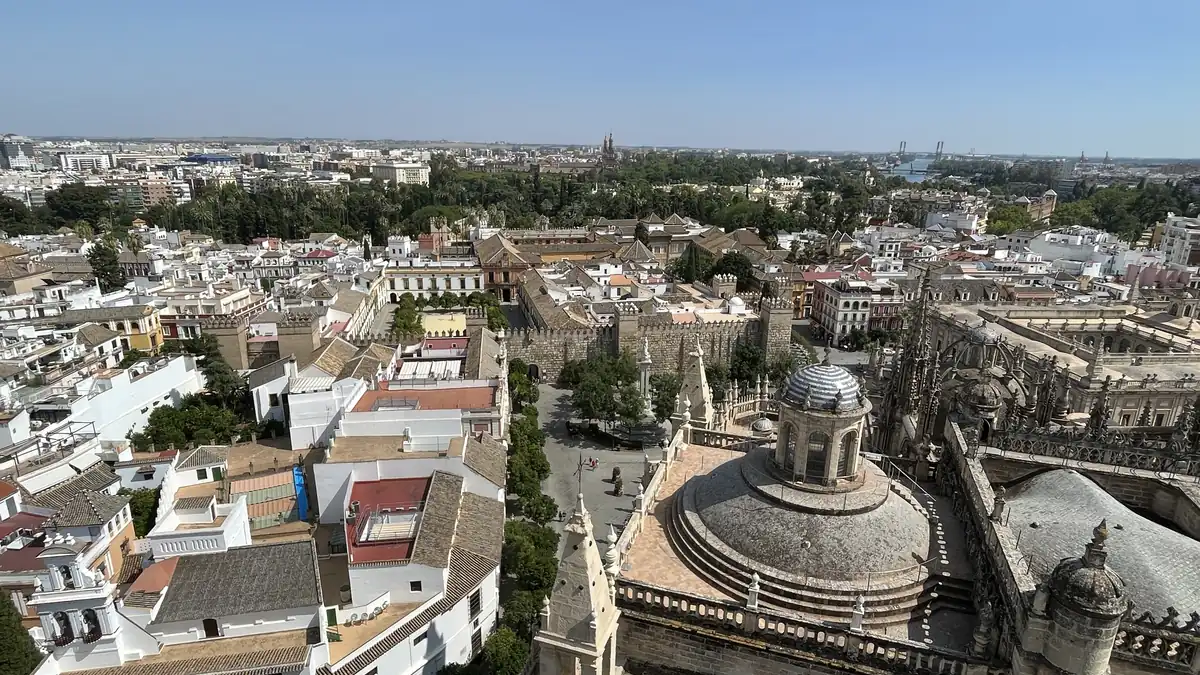
Looking from the Giralda towards the Real Alcázar and Archivo de Indias, photographed in 2023. Photo: Ajonesish344 · CC0 1.0 · Cropped, resized, WebP.
Why Seville is worth visiting
Seville rewards looking closely. A palace courtyard, a tower’s brickwork and a stretch of city wall tell different stories about al-Andalus and the city that followed it. The Alcázar and Cathedral area offers a useful first focus; the northern walls and craft collections give a longer stay another direction.
Islamic and Mudéjar heritage: read the layers
Almohad remains
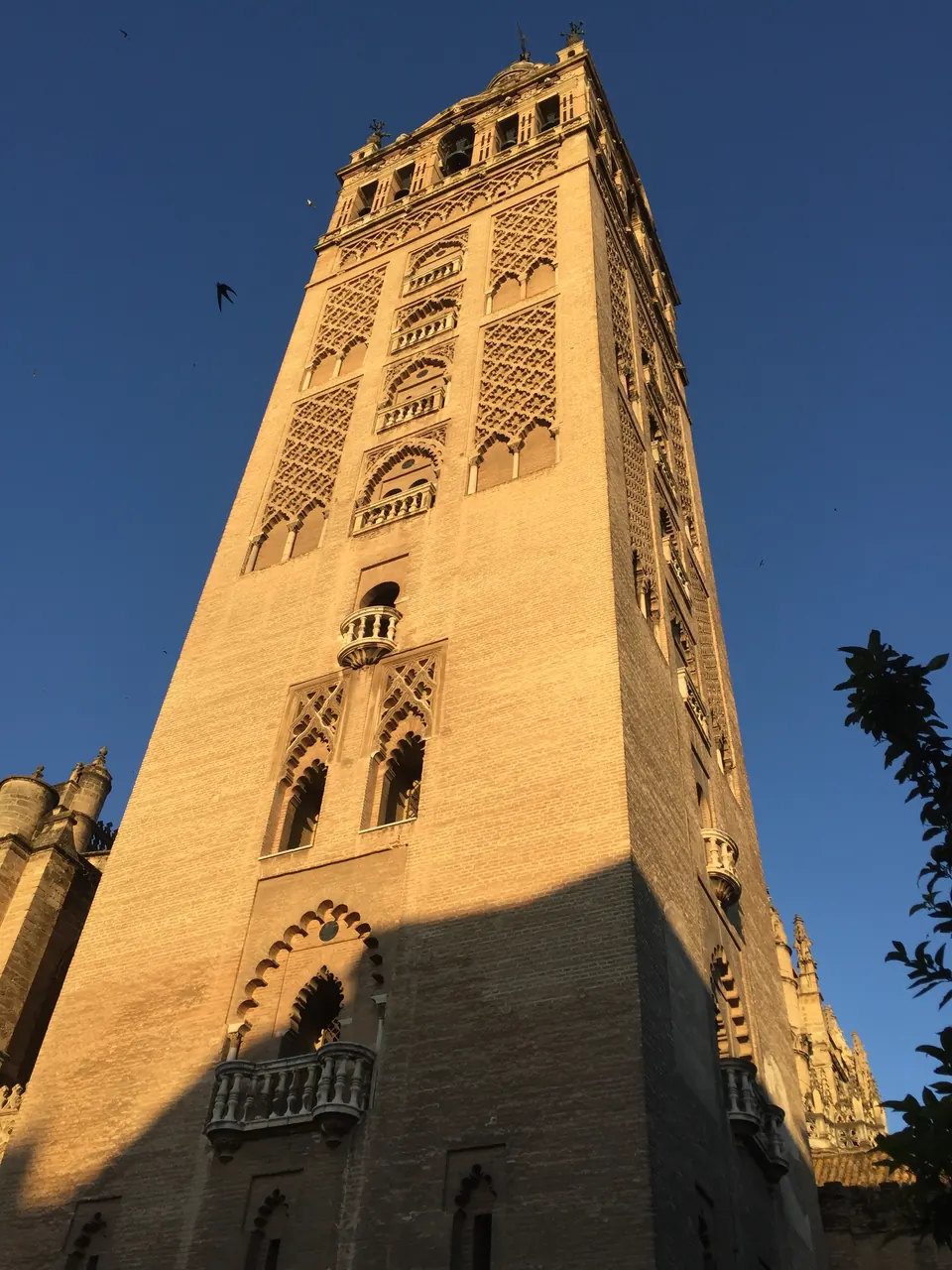
The Giralda began as a minaret. Its later upper section and present role as the Cathedral’s bell tower make that change of use visible.
A palace shaped across periods
The Real Alcázar combines Islamic-period remains with later buildings. Pedro I’s Mudéjar palace should not be confused with an unchanged Islamic-period complex.
Heritage and worship today
Seville Cathedral is a functioning Catholic cathedral, not a Muslim prayer stop. The Alcázar is a historic royal palace complex, not an active mosque.
The Giralda, now Seville Cathedral’s bell tower, photographed in 2016. Photo: Melrskin · CC0 1.0 · Cropped, resized, WebP.
A first day with room to pause
A flexible Seville one-day sightseeing route
Choose one main interior visit, then add a nearby focus if your booking, pace and energy allow. This is editorial orientation, without measured walking times, distances or a checked accessible route.
Start with the Real Alcázar area
If the palace is your main visit, build the day around your actual admission. Use the official preparation and ticket information to check included spaces and seasonal arrangements. If you prefer a Cathedral visit, keep the palace area as an exterior introduction.
Make sense of the Cathedral and Giralda
Look for the former minaret within the present Christian complex. Choose an interior or tower visit only with separate, suitable admission and enough time; it is not a required second booking. The operator’s cultural-visit page explains the entry arrangements.
Choose a riverside finish—or stop here
If it suits your remaining day, consider the Torre del Oro and riverfront as another view of Seville’s defences. Check the museum information in its heritage entry before planning admission. Leave room for rest and independently arranged prayer and meals.
On another day: pair a northern-city focus with the Macarena walls or Centro del Mudéjar. El Salvador offers another central heritage story. The listings below are choices, not a checklist to complete in one circuit.
First day: a flexible introduction to Seville's historic centre
Start with the Cathedral and Royal Alcázar area, using UNESCO's account to distinguish Almohad remains from later Christian and Mudéjar work. Choose one interior visit around an actual admission booking, then leave space for another heritage highlight if your energy and the current access arrangements allow. Keep the Macarena walls and Centro del Mudéjar for a separate outing rather than filling the day with every candidate. Use TUSSAM's current information for connections. Confirm prayer and meals independently: the shortlisted mosque is not a confirmed prayer stop, food listings are not halal assurances, and heritage listings do not guarantee admission. This is sightseeing orientation, not a timed route or verified itinerary.
6 published highlights, with historical sources and visitor considerations.
Royal Alcázar: Almohad remains and later Mudéjar work
Royal Alcázar / historic centre
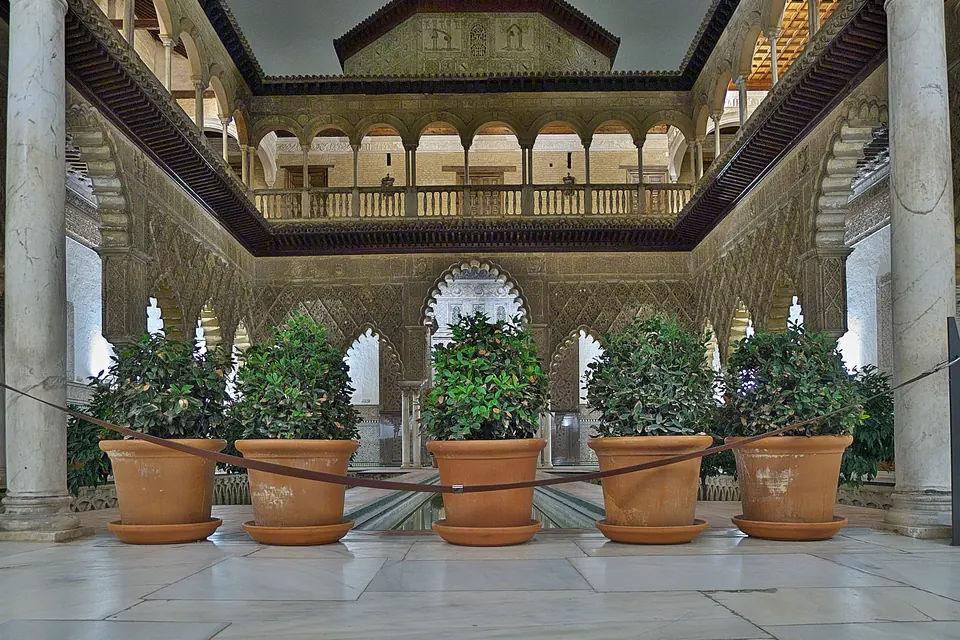
The Patio de las Doncellas in Pedro I’s palace, photographed in 2013; visitor arrangements can change. Photo: Jl FilpoC · CC BY-SA 4.0 · Cropped, resized, WebP.
The Royal Alcázar brings together buildings from different periods. UNESCO distinguishes surviving Almohad spaces, including the Patio del Yeso, from the later Mudéjar palace of Pedro I. Look for those layers rather than describing the whole complex as one Islamic-period palace. Use the operator's current ticket and closure information before visiting; a guide listing does not guarantee admission to every room or garden.
The Giralda: former minaret, present cathedral bell tower
Cathedral complex / historic centre
The Giralda preserves the structure and decoration of an Almohad minaret, with a later Renaissance upper section. It is now part of Seville Cathedral. The adjacent Patio de los Naranjos preserves the former mosque courtyard, altered over time. Read these as heritage remains within a Christian complex, not a current Muslim prayer facility. Check cultural-visit rules and the tower's specific ascent restrictions before booking.
The Torre del Oro belonged to Seville's Almohad defensive system beside the Guadalquivir. Its history includes later alterations and its present role as a maritime museum. Viewing the tower introduces the river-facing defences without assuming every part of the building is medieval. Consult the Ministry of Defence museum information for current access and group arrangements. This heritage highlight is not a prayer stop or an admission guarantee.
Macarena walls: remains of the Islamic city's defences
Macarena / northern historic centre
Seville's official tourism service identifies the surviving wall beside the Macarena basilica as part of the Almohad city's defences. The wall and towers offer a different perspective from the palace and former mosque complex. Keep their history distinct from the neighbouring twentieth-century basilica. Consider this a separate northern outing; public views of the remains do not establish entry to towers, interiors or a continuous accessible route.
El Salvador: the site of the former Ibn Adabbas mosque
El Salvador / historic centre
The operator's history traces the El Salvador site to the ninth-century Ibn Adabbas mosque and explains its later conversion and rebuilding as a Christian church. Surviving courtyard and tower elements help interpret that earlier history; they do not make today's church an active mosque. Check the church's cultural-visit arrangements and permitted spaces before visiting. Historic ablution arrangements described by the source are not evidence of present wudu facilities.
Centro del Mudéjar: craft traditions after Islamic rule
Palacio de los Marqueses de la Algaba / Feria
The municipal Centro del Mudéjar at the Palacio de los Marqueses de la Algaba interprets craft traditions through objects including ceramics, plasterwork and woodwork. It offers context for understanding how Islamic artistic traditions continued in later Seville. A museum devoted to Mudéjar work is not itself evidence of a medieval mosque. Recheck the municipal visitor arrangements and current displays before making a separate visit; opening and access have not been confirmed directly.
1 published location listing; the evidence does not confirm every visitor arrangement.
The foundation’s own salat resource is a starting point for checking your travel date. Confirm the current centre, entrance and prayer arrangements directly; do not substitute a new-centre project or historic mosque remains. Visitor access, women’s facilities and wudu remain unconfirmed unless individually evidenced below.
Mosque
Fundación Mezquita de Sevilla — Ponce de León centre
Location / listing
Source checked — exact assertion only
Seville's municipal tourism worship brochure lists Fundación Mezquita de Sevilla at Ponce de León, 9, Seville.
View source evidence for Location / listing at Fundación Mezquita de Sevilla — Ponce de León centre
The municipal tourism brochure, PDF page 2, lists the foundation and this numbered location. Read on 2026-10-21; the brochure's publication/update date is not established. This supports a published listing only. The current operator location page describes an existing centre; a separate new centre project must not be confused with it. Current visitor entrance, prayer access, women's facilities and wudu remain unconfirmed.
Map search only; directions and entrances are unverified.
Still unconfirmed
Visitor prayer access: unconfirmed.
Women's prayer space: unconfirmed.
Ablution facilities: unconfirmed.
Visitor entrance: unconfirmed.
A location listing does not confirm visitor prayer access or facilities.
Food options for Muslim travelers in Seville
8 published branch-location listings to help you make enquiries.
Ask about the specific meal, ingredients, meat sourcing, preparation and alcohol use. If a certificate is offered, check its issuer, validity and branch coverage. Location evidence or a cuisine description does not establish current halal certification; these are not verified halal meal recommendations.
View source evidence for Location / listing at Al Wadi Restaurant — Calle Jimios
The operator's contact page identifies Al Wadi Restaurant and this exact street/number. Checked on 2026-10-21; no direct response or independent visit. It establishes the published branch location, not current opening, meat sourcing, certification, preparation or halal suitability.
View source evidence for Location / listing at Restaurante Al Medina — Jesús del Gran Poder
The operator contact page agrees on the street and number but displays conflicting postcodes in its header and body; no postcode is asserted. Checked on 2026-10-21. Its culinary marketing is not separately reviewed operational evidence. Current opening, branch-level certification, ingredients, meat sourcing and meal suitability remain unconfirmed.
View source evidence for Location / listing at Restaurante Al Sultan La Alameda — Trajano
The branch-specific operator site identifies Trajano 49 and publishes a business contact. Read on 2026-10-21; visible article dates are older and do not establish recent operation. Do not substitute the San Fernando establishment or directory phone numbers. Current opening, certification, meat sourcing, preparation and halal suitability remain unconfirmed.
Map search only; directions and entrances are unverified.
Still unconfirmed
Current certification: unconfirmed.
Meat sourcing: unconfirmed.
Whole-premises alcohol policy: unconfirmed.
Location and historical source evidence do not establish current operation, halal suitability or current certification.
Practical booking and visitor advice
Alcázar admission
Follow the ticket link from the official visit page. Review the chosen date, ticket conditions, included spaces and any documentation required for your category. Seasonal schedules, royal-room visits and occasional space or garden closures can affect the plan; check current notices rather than assuming every area is available.
Cathedral and Giralda visits
The cultural-visit information warns that worship can change visiting arrangements. Read the dress, head-covering and photography rules and ask how they apply to your requirements before booking. Check the tower’s ascent restrictions separately; ramps do not establish a step-free visit.
Connections and access
Use TUSSAM’s bus and tram information for current services, stops and notices. Compare the actual stops with your admission and accommodation, and ask about the approach you need. This guide has not checked travel durations, accessible entrances or a continuous step-free route.
Sources and verification
Dates and evidence belong to each assertion. “Source checked” means the cited source was reviewed; “operator claim” is not independent certification. Read each listing’s evidence and “Still unconfirmed” details before relying on a prayer stop or meal.
Use the official attraction links for changing admission and restrictions. Our editorial standards explain review decisions and corrections.
Continue with Córdoba and Granada
Compare Seville’s Almohad and Mudéjar layers with another Andalusian city. Arrange travel between cities separately.