United Kingdom · Choose an area, leave room to explore
London for Muslim Travelers
Discover Islamic art, the East End’s changing community life and London’s mosque architecture. Build an outing around one area or museum, with prayer arrangements and food enquiries planned separately.
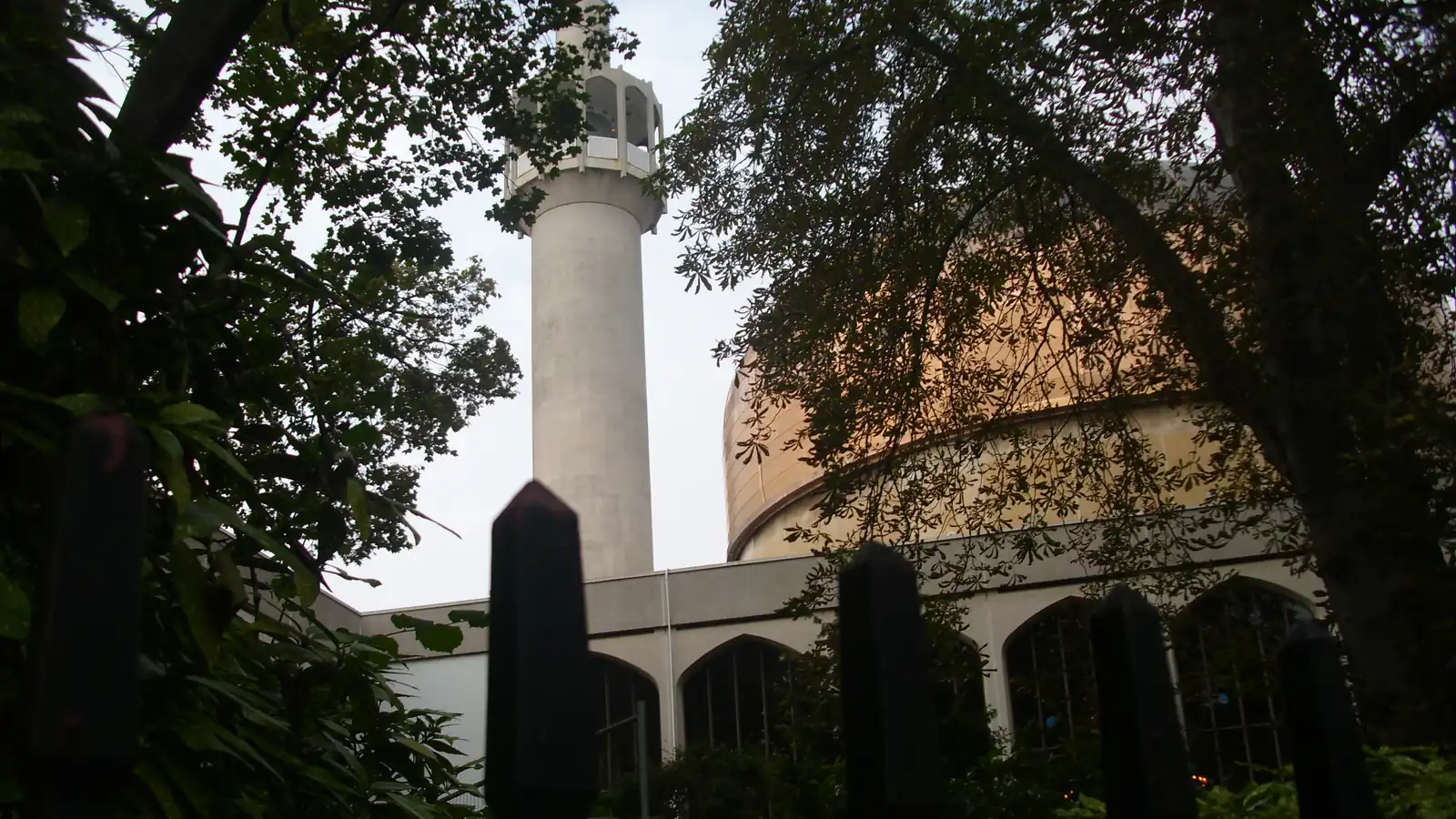
London Central Mosque, photographed in September 2014; an architectural view, not current access information. Photo: Amhaaw19 · CC BY-SA 4.0 · Cropped, resized, WebP. Adaptation under the same license.
Collections, communities and changing buildings
Why London is worth exploring
London offers more than a list of monuments. You can look closely at Islamic ceramics and textiles in a museum, trace the changing uses of a Brick Lane building, or explore the architecture of a modern mosque. Each offers a different way into the city’s Muslim connections.
The most useful starting decision is geographical. Whitechapel, Bloomsbury, South Kensington, Regent’s Park and Holland Park are separate planning choices. Give one focus enough space, then add another only after checking transport, access and your own energy.
Living places of worship and museum collections call for different visits. A historical building description does not settle prayer access; an object’s online record does not guarantee it is on display.
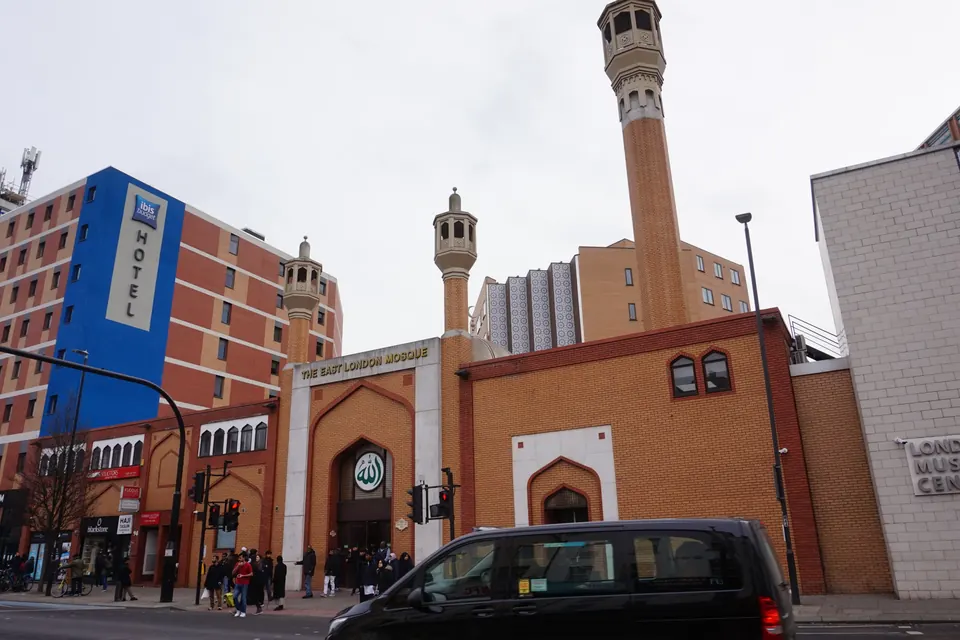
East London Mosque, photographed in January 2020. Confirm the relevant entrance with the operator. Photo: Ian S · CC BY-SA 2.0 · Cropped, resized, WebP.
Three choices · Not one walking circuit
Choose your London sightseeing focus
These are flexible editorial suggestions, not measured walks, timed itineraries or surveyed accessible routes. Use TfL’s journey planner from your actual starting point and check current services and access needs.
Whitechapel and Brick Lane
Use East London Mosque as a location reference and Brick Lane’s documented building history as a heritage focus. Investigate the published local food locations separately. Confirm worship and entrance arrangements before relying on a prayer stop; a building’s history does not establish present access.
Islamic art and museums
Choose the V&A in South Kensington or the British Museum in Bloomsbury as your main museum visit. Visiting both requires separate transport and time planning. Select a few themes or objects, check gallery notices and avoid treating online collections as a guaranteed display list.
An additional architectural visit
Consider London Central Mosque near Regent’s Park, or Leighton House near Holland Park, as a separate journey. These are different places and different kinds of visit. Leighton House’s Arab Hall is in an artist’s house museum, not an active mosque.
First day: choose one area and leave room to adapt
Choose a museum focus or an east-London neighbourhood focus rather than combining every candidate in one day. For an east-London outing, use Brick Lane's documented building history as one point of reference and arrange other stops around current access and your needs. Plan transport from your actual starting point. Confirm prayer and meals separately. This is an editorial sightseeing suggestion, not a measured walk, timed route, accessible itinerary or verified prayer-and-meal plan.
Follow a material through the Islamic Middle East collection: ceramics, textiles, metalwork or architectural woodwork. Compare how objects were made and used, and read their regional and historical context. Check the museum’s current object and visitor information rather than expecting every collection highlight to be available.
British Museum, Bloomsbury
The museum identifies its Islamic-world collection with the Albukhary Foundation Gallery, Rooms 42–43. Use the gallery guide to choose a focus and the visitor notices to check access for your date. Read provenance information alongside the objects’ artistic and everyday uses.
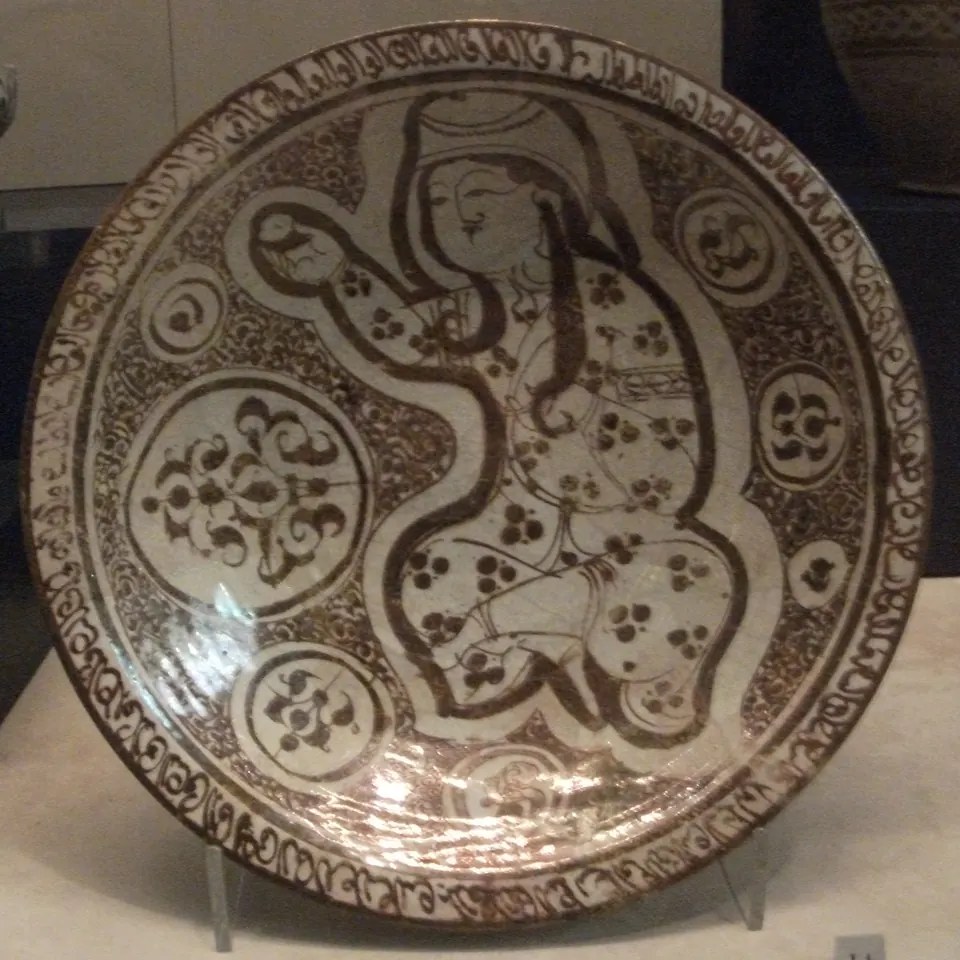
Islamic art at the V&A, photographed in June 2011; this historical photograph does not promise current display. Photo: Johnbod · CC BY-SA 4.0 · Cropped, resized, WebP.
Muslim communities and architectural heritage
Brick Lane: a building’s changing use
Historic England’s account of Brick Lane Jamme Masjid records a French Protestant chapel of 1743–44, conversion to a synagogue in 1897 and a mosque in 1976. Read that sequence as local community history. Respect present worshippers and neighbours, and arrange any interior visit separately.
A modern mosque and an artist’s house
London Central Mosque’s listing describes the 1970–77 design by Sir Frederick Gibberd and Partners. Leighton House offers a different story of artistic exchange in a Victorian home and studio. Heritage designation, museum admission and joining worship are separate questions.
London heritage and collection highlights
5 published entries, with their original research, sources and visitor considerations.
Islamic art at the V&A: materials and everyday objects
V&A South Kensington
The V&A's Islamic Middle East collection includes textiles, ceramics, metalwork and architectural woodwork from several regions. Use its object records and gallery information to choose a few themes rather than expecting a single story to represent every Muslim society. The Ardabil Carpet is one possible focus, subject to current display arrangements. This is a museum visit; historic architectural fragments and religious objects do not establish prayer or wudu facilities.
The Albukhary Foundation galleries, identified by the museum as Rooms 42-43, bring together objects from different periods and regions of the Islamic world. Compare royal commissions with objects of daily life, and read about how individual objects entered the collection. Do not assume that every online object is currently displayed. Check the museum's current visitor and gallery notices; this cultural visit is not an identified prayer stop.
Leighton House was the home and studio of Victorian artist Frederic Leighton. The museum's account of its Arab Hall and Narcissus Hall offers a different setting for considering artistic exchange from a conventional collection gallery. Keep the house's nineteenth-century context distinct from the places and traditions that inspired its interiors. It is an artist-house museum, not an active mosque. Check current tickets and room access before making a separate journey.
Historic England records the building's progression from a Huguenot chapel to a synagogue and then a mosque. That sequence provides a focused way to consider migration and changing community life around Brick Lane. Respect its present religious use and neighbours when viewing the exterior. The heritage listing identifies protected fabric; it does not grant permission to enter or confirm the visitor prayer arrangements that apply on your date.
London Central Mosque: twentieth-century architecture
Park Road / Regent's Park area
Historic England's listing describes the mosque and Islamic Cultural Centre designed by Sir Frederick Gibberd and Partners and built during 1970-1977. It adds a twentieth-century architectural focus alongside London's older adapted religious buildings and museum collections. Keep architectural history separate from arrangements for visitors and worshippers. Confirm any intended interior visit directly; a statutory building address or listing designation does not establish entry or facilities.
View source evidence for Location / listing at East London Mosque
The operator separates this mosque address from the adjoining London Muslim Centre and Maryam Centre. Read on 2026-10-23. This supports the stated location only, not a checked visitor entrance, prayer access, women's facilities or ablution arrangements.
View source evidence for Location / listing at London Central Mosque and Islamic Cultural Centre
The official heritage listing gives this exact statutory address for the mosque and cultural centre. Read on 2026-10-23. Building identity and location do not establish current entry, visitor prayer arrangements, women's space, wudu or an accessible route.
Map search only; directions and entrances are unverified.
Still unconfirmed
Visitor prayer access: unconfirmed.
Women's prayer space: unconfirmed.
Ablution facilities: unconfirmed.
Visitor entrance: unconfirmed.
A location listing does not confirm visitor prayer access or facilities.
London Central Mosque’s statutory building location and architectural listing do not establish unrestricted entry or particular worship facilities. Read the individual source cards for what is supported and what remains unconfirmed.
Food locations to investigate
5 published location listings; these are not verified halal meal recommendations.
Ask about the specific dish, ingredients, meat sourcing, preparation and alcohol use. If certification is offered, check its issuer, current validity and exact branch scope. Neither listing is presented here as independently halal certified or universally suitable.
View source evidence for Location / listing at Tayyabs — Fieldgate Street
The operator's Find us section publishes this branch address. Read on 2026-10-23. The site also advertises bring-your-own-bottle. This is a location assertion only, not halal certification, alcohol-policy approval, ingredient verification or confirmation of current service hours.
View source evidence for Location / listing at Dishoom Shoreditch — Boundary Street
The operator identifies the Shoreditch branch and this exact address. Read on 2026-10-23. Its page includes bacon and alcoholic drinks as well as dietary marketing. No whole-premises halal suitability, alcohol-free policy, certification, sourcing or preparation assertion is approved.
Map search only; directions and entrances are unverified.
Still unconfirmed
Current certification: unconfirmed.
Meat sourcing: unconfirmed.
Whole-premises alcohol policy: unconfirmed.
Location and historical source evidence do not establish current operation, halal suitability or current certification.
Practical transport and visitor information
Plan the actual journey
Enter your own start and destination in TfL’s official planner. Check current service, disruption and accessibility information, including the entrances and lifts you need. No fare, travel duration, operating service or complete step-free route is promised by this guide.
Check the space you want to see
Use the museums’ current visitor information for bookings, gallery closures and room access. Treat Leighton House admission as a separate decision. Museum objects, decorative fountains and historic washing features do not establish usable prayer or ablution facilities.
Keep the outing flexible
Choose fewer stops and leave room for rest, confirmed prayer arrangements and a meal you have assessed. Respect congregations and residents when photographing buildings. An address or a suggested order is not a checked entrance, accessible path or guarantee of admission.
Sources and verification
The cards preserve the dates and scope of their individual assertions. “Source checked” means the cited material was reviewed; an operator claim is not independent certification. Heritage records support historical identity, not current facilities. Visitor guidance provides context; it does not establish new venue facilities or certification.
Read each source and the “Still unconfirmed” details before relying on a venue. Our editorial standards explain review and corrections.
Photographs and our adaptations retain the license shown beside each image: CC BY-SA 4.0 for London Central Mosque and the V&A photograph, CC BY-SA 2.0 for East London Mosque. Those photo licenses apply separately from the site’s general copyright notice.
Explore Islamic art in another city
For a separate trip, compare London’s collections with Istanbul’s mosque architecture and historic peninsula. This is another destination guide, not an extension of a London day plan.